Meta Plugged Muse Into the Small-Business Marketing Stack
Meta's agent can now read a small business's ad accounts, social activity, storefront and workflow tools. That makes the approval rules around marketing work part of the product.
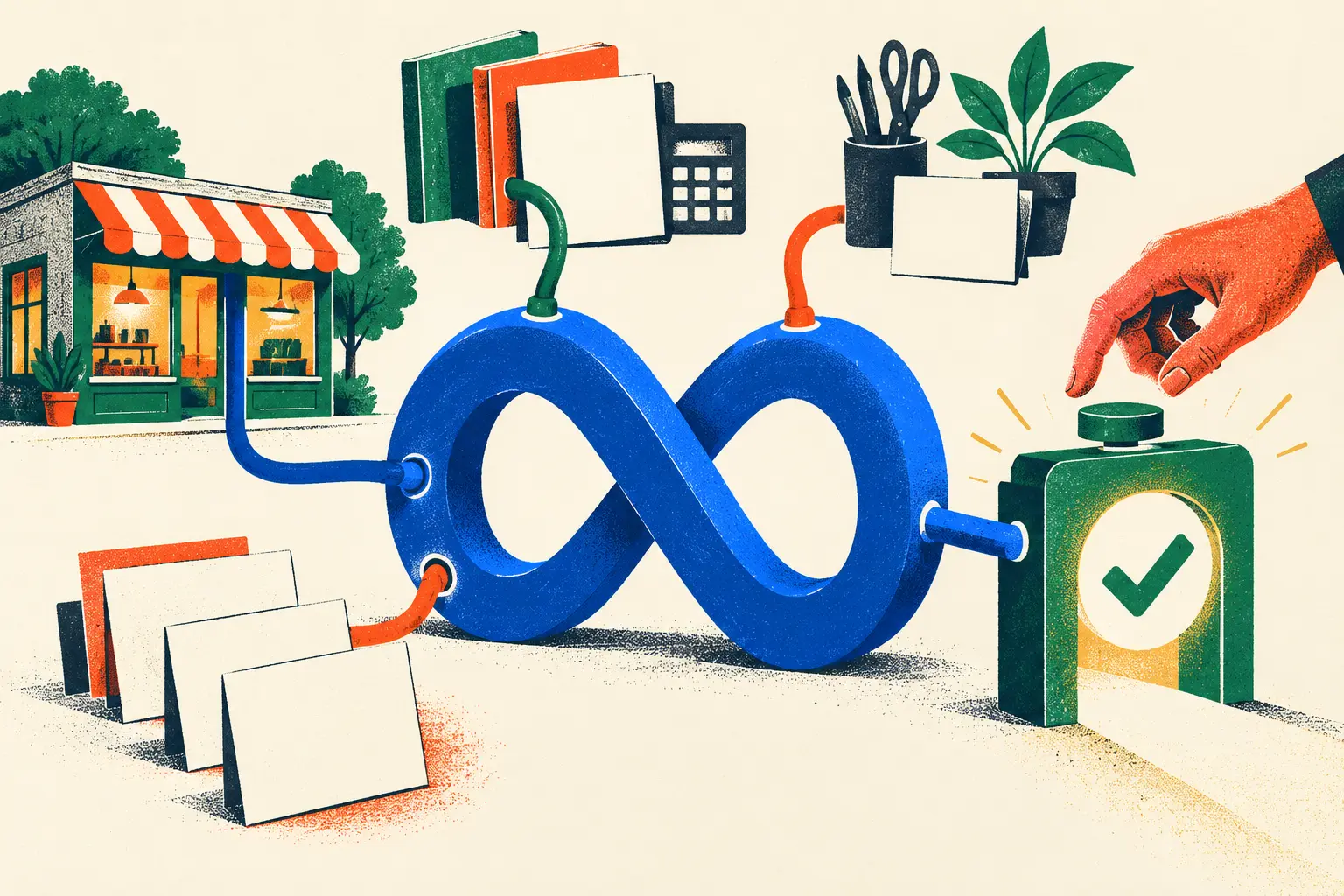
Meta released Muse for Small Business on September 29. It can connect to a company’s Meta ad accounts, Instagram professional analytics, Facebook Pages, Shopify store and tools including Canva, Klaviyo, QuickBooks, Notion, Slack and Zoom.
For a 5-to-30-person marketing team, the agent is moving from a place to ask for a draft into a place where the draft can use the business’s own sales, campaign and customer context.
Meta says Muse can analyze sales, campaigns and social activity to make a growth plan, review what has worked, then draft the next campaign. It can also look across email, calendar and news to suggest work it can take off an owner’s plate. The company says nothing publishes, sends or spends without approval.
“I need to free up time for the work that actually makes my business money.”
Tom Mulholland, owner of Mulholland Grocery in Iowa, in Meta’s launch announcement.
That is the business case Meta is selling. A local retailer can’t add a specialist for every data source or marketing task. The software can carry a little more of the coordination work if it has access to the systems where the evidence lives.
One agent can see the campaign and the customer record
The list of connections is the story. A chatbot can draft an ad from a sentence in a prompt. Muse can pull in an ad account, an Instagram account, a store, a marketing platform and a business’s working documents. It starts with a wider view of what the team has already done.
That makes small-business marketing work more connected. The same analysis can follow a customer question into a product-page change, a campaign brief and a draft reply. A marketer still needs to decide whether the claim is right, the offer is legal and the message fits the brand. But the first pass no longer has to begin by opening five tabs and re-explaining the business to an assistant.
Axios reports that about a third of early Muse users are already connecting a business account. Meta VP of AI Products Vishal Shah described the behavior plainly.
“People are using Muse to run their business.”
Vishal Shah, Meta VP of AI Products, in an interview with Axios.
The language is important because Meta did not build a separate product for marketers. It added business context, connectors and usage limits to the same Muse product it launched for consumers earlier this month. Its free tier covers most uses, Axios reported, while paid plans create more capacity for heavier users.
Marketing operations becomes the control surface
The earlier Muse shopping-agent launch changed the buyer side of the market. Consumers could send an agent to research, compare and buy. This release puts an agent on the operating side too, with permission to examine the data a small business uses to market and serve those buyers.
That narrows the gap between a recommendation and an action. If Muse sees a weak campaign, it can draft the next one. If it sees a customer question, it can prepare a response. If it sees a sales or inventory change, it can include that context in the advice.
The useful question for marketers isn’t whether an agent can produce an ad. Most teams already know the answer. It is whether the agent has access to a reliable source of truth before it starts producing work.
The answer should be yes for reporting, research and drafts. It should be much more limited for publishing, paid budget, customer promises and changes to a CRM or product page.
That is the same operating challenge OpenAI raised with Dots, its new background agent for paid ChatGPT users. Persistent agents can keep work moving across tools. They also need a clear rule for when to stop and ask a person.
The caveat is the evidence gap
Meta’s examples are useful demonstrations, not proof of performance. The company has not published campaign-lift, cost, conversion, time-saved or retention data for Muse for Small Business. Its launch materials rely on early testers and partner testimonials.
That does not make the release unimportant. It sets a more practical baseline for AI marketing software. The next agent is expected to understand the business before it writes. It is expected to work across the systems a small team already pays for. And it is expected to leave the customer-facing decision with a person.
Start with one recurring task that already has a clean source of truth and a clear review step. Weekly campaign analysis is a better first job than autonomous publishing. Make the agent show its inputs, prepare a recommendation and wait for approval.
A small business does not need an autonomous marketing department. It needs fewer lost hours between the question, the evidence and the next decision.
Quoted in this story
Want your perspective in coverage like this? Get quoted.
Sources
This story is part of our running coverage: The State of the AI Marketing Stack →
Get Net Effect, our Monday newsletter.
Net Effect is The State of AI Marketing's Monday recap: how AI is changing marketing, the moves brands are making, and what to do next.
Trouble loading the form? Open the signup form .


