
AI ToolsOctober 23, 2026
ChatGPT Ads Can Run Rewritten Copy Without Your Review
OpenAI plans to enable creative changes automatically. Advertisers can opt out, but its published rollout dates conflict.
AI news, data, and consequences
for marketing leaders
Section
Coverage of the AI tools reshaping marketing work: what companies are actually deploying, what gets pulled after the pilot, and what the switching costs look like. Not tool roundups. Consequences.
OpenAI plans to enable creative changes automatically. Advertisers can opt out, but its published rollout dates conflict.

CustomerLake's expanded beta lets eligible enterprise teams test whether AI removes routine engineering handoffs while keeping customer-data controls in place.

Researchers found internal work behind discoverable Muse share links. Meta paused sharing, and a 40-link retest found no pages still open. Marketing teams need to review what they already shared.

Bing's new report gives marketers a list of missing AI citations. An SEO practitioner's early use shows why buyer relevance still decides which gaps deserve a page.

New fraud screening and checkout tools give merchants a way to admit AI shoppers. Recognizing the agent still leaves the customer's purchase authority to verify.

Shop MCP lets compatible agents search Shopify's catalog and build a Shop Pay checkout. The new route makes catalog information part of the purchasing path.

The deal targets connections between marketing tools. Buyers should judge the maintenance promise by the records that arrive correctly.

Meta says Muse Wonder can retain context and keep working through setbacks. For marketers, the useful test is whether an agent carries the right customer facts into the next task.

Google’s new work agent can have its own email, calendar, files, and tool access. That changes the question from whether it can draft a campaign to what it is authorized to do.

Pinterest can turn a saved look into salon guidance. Beauty marketers should test whether their content survives that translation before buying more traffic.
Nieman Lab found ChatGPT images bearing New Yorker cartoonists’ signatures. Marketers should check generated creative for false attribution before publishing.

Carat, FreeWheel, NBCUniversal and Newton put a custom AI agent into an upfront CTV buy. The first deployment is real, but its buyer, results and measurement rules remain undisclosed.

ChatGPT will show clearly labeled ads beside generated images, while OpenAI builds the measurement and brand-suitability systems advertisers need to judge the placement.

Tavus unveiled a lifelike, real-time video model as Synthesia expands interactive avatars, but marketers still lack evidence these formats lift conversion.

Toluna lets marketers explore ideas with synthetic personas, then send the same study to real consumers for validation.

The closed beta lets agents pay for APIs, search, data and tools as they use them, giving B2B marketers a new question about how software gets discovered, priced and sold.

Zenity showed how a public Salesforce lead form could steer an AI agent toward CRM data and Slack. Salesforce says it fixed the reported paths.

Kitesurf can now call the actions a site exposes to AI agents. For marketing teams, the practical test moves from whether tools exist to whether an agent can finish a real task.
Meta's agent can now read a small business's ad accounts, social activity, storefront and workflow tools. That makes the approval rules around marketing work part of the product.

Dots can research, draft and update work in the background across connected apps. That puts the rules for what an agent can send, change and escalate inside marketing operations.
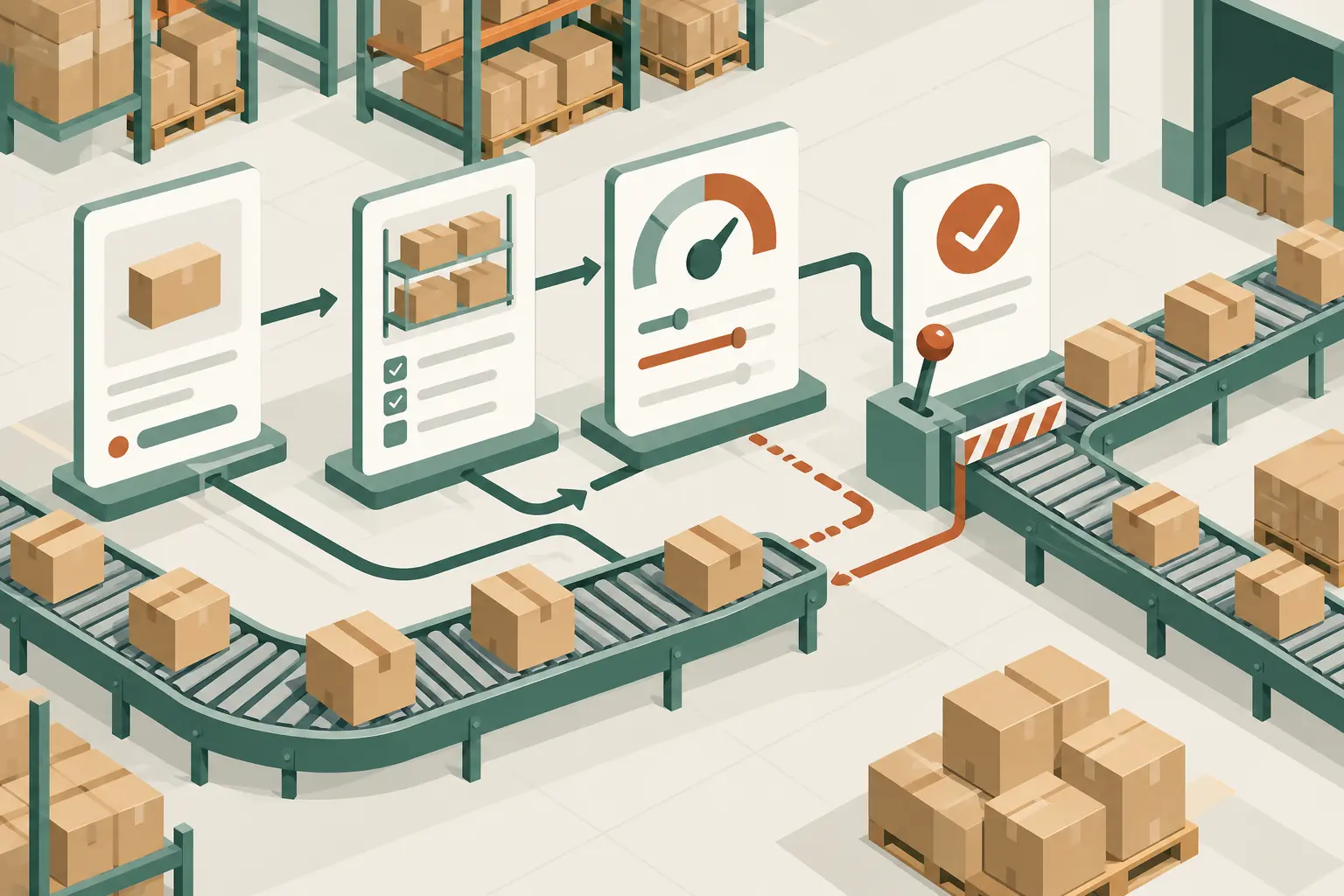
Amazon added persistent memory, seller-defined AI workflows and a plugin for Amazon Quick and Claude. Sellers can choose recommendation-only workflows or approve actions before they run.

Attentive added lifecycle tools that sort shoppers by interest, value and recent behavior. Frye says the suite lifted overall revenue 13%, but the vendor hasn't published the study design.

Notch says its agent ran a two-month Scentless campaign, made creative and shifted budget across Meta and TikTok. It hasn't published the spend, control group, baseline CAC or attribution method.

Phave says it can decide the sequence of marketing touches for individuals, accounts and buying groups. Its central claim is a workflow change, not proven pipeline performance.

Alex Lieberman says Tenex Agents will handle recurring work across functions. For marketers, it shifts a partner test: can its know-how keep working after the engagement ends?

TypeSafe's new model is built to classify, score, and route inputs with confidence scores, which could make marketing automations safer to run without a person checking every step.

OpenAI plans to move custom GPT workflows into plugins, which means teams need to find their buried brand assistants and test what survives the migration.

Pinterest's new visual-search ad unit places brands beside the images people use to compare products, then lets its AI campaign suite do more of the delivery work.
OpenAI's first CRM and ecommerce integrations move campaign work closer to the customer data and catalog a marketer already uses.
The useful part of TSA's Ace results isn't the chatbot. It's the data and escalation work that made a narrow agent useful.

Meta's new Business Messaging MCP lets an AI coding agent set up a WhatsApp Business integration, but it doesn't remove the need for review.

Meta One bundles AI creation, audience growth, analytics, publishing and customer response in paid plans. The limits that determine whether it's worth the price remain unpublished.
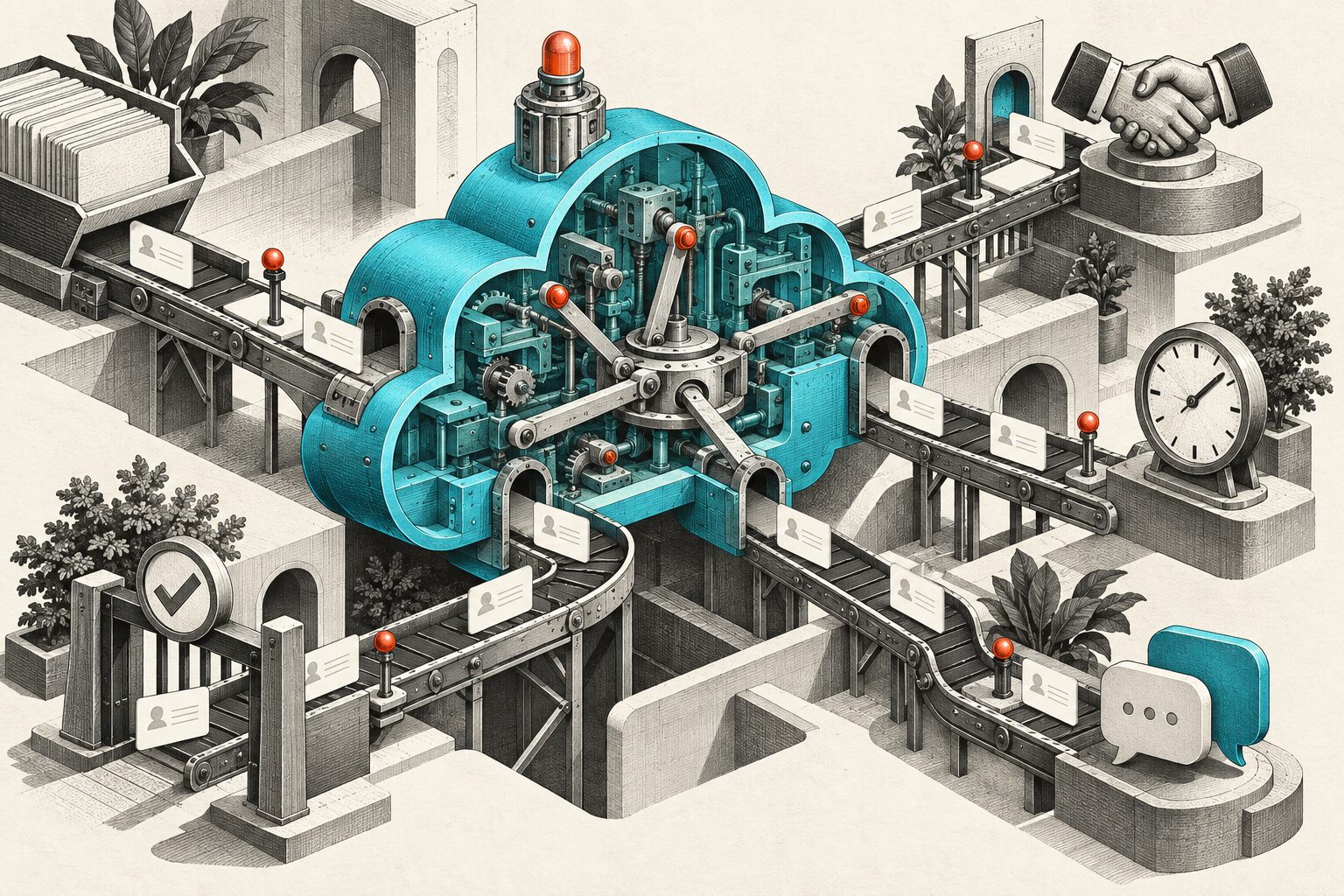
Koa is a Salesforce-hosted reasoning model trained around CRM workflows. Its early benchmark is promising, but pilots have not shown an effect on pipeline or customer outcomes.

Three SpaceXAI team members are using Grok Bot in a public three-day company-building experiment. The value for marketers is the visible handoff between planning, product, sales and marketing.
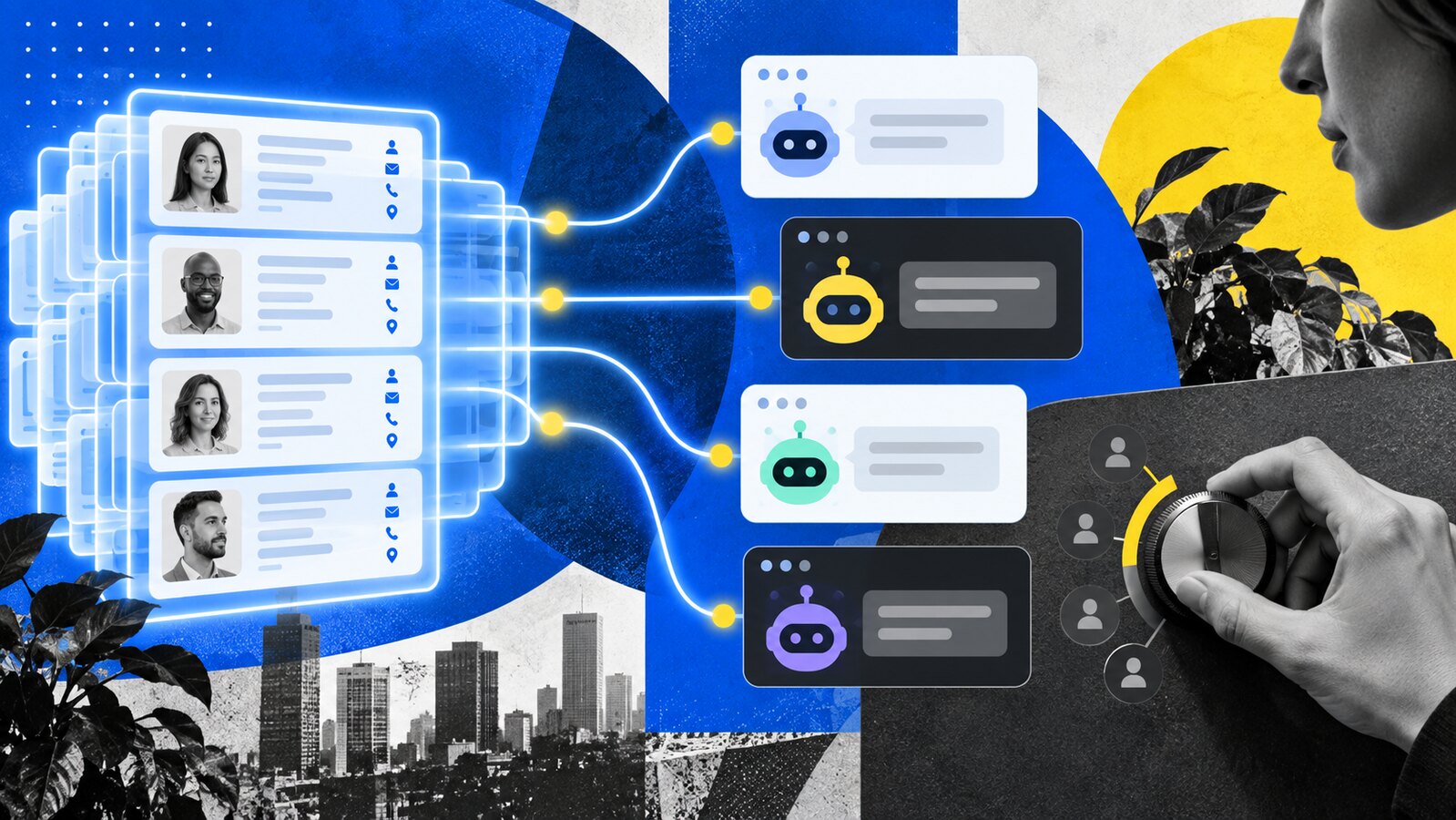
HubSpot says its CRM connectors now span ChatGPT, Claude, Gemini and Copilot. The real change is not another chat interface. It is who can act on customer data and under what controls.

OpenAI's new flagship does CRM and browser work in about half the time. The same release adds a monitor that can pause long agent jobs, and on the API the task simply stops.

Mintlify's marketing team has no engineers and one person whose job is the material its AI reads. Buffer's growth lead says an AI setup without that runs at about 60% of what it could do.

Anthropic's top model went dark three days after launch, then came back for approved organizations only. Salesforce now ships Claude on by default. The model in your stack is someone else's choice.

OpenAI ended a years-long partnership over who bought Cursor, not over anything Cursor did. If you pay either company, the models inside your tools now track corporate alliances.

Google confirmed on August 26 that it rewrites every search result link through a redirect. Nozzle measured 500 to 1,000 requests to read one keyword's five pages, up from a handful.

Shopify's changelog dates it August 21, with nothing to install and no setup step. Independent developers found the tools live on storefronts weeks earlier, and no merchant was asked.

Particle's Radar transcribes 130,000 shows and hands them to AI agents through an API. It also runs a search engine for podcast ads, which turns every host read into a public record.

X shipped an Ads MCP with 10 write functions this week. Meta, TikTok, Pinterest and Snapchat got there first. Across all five, the whole safety model is one switch.

Nvidia changed the tools, memory and rules around Claude Opus 5 and nothing else. For marketing teams, that moves the highest-return hour of the week.

Buzz on July 21, Grok Bot on August 11, Add to Slack on August 20. Same pitch, three different products. What each one costs, what each can actually do, and which a five-person team should test.

Ten agent platforms, one-click deployment, and a browser where IT can see everything running. It landed three days after we wrote about the agents nobody could see.

Google refiled its scraping case on August 10, narrowed to the licensed content inside its results. There's no official Google rank API to fall back on, which is why your tools run on scraped data.

Resoneo read ChatGPT's own retrieval stream. The index keeps a title and about 200 characters per page, ignores your meta description, and shows free users a different web than paid ones.

Cloudflare can now spot AI assistants reaching into company tools, and block the ones that skipped approval. Google, Microsoft, Meta and Pacvue all run the endpoints your team plugged into.

The lab's Frontier Red Team put swarms of Claude agents in shared workspaces. They copied each other, colluded on price, and in one setup wrote malware to disable each other.

Ask Advisor will compare your campaign performance against anonymized averages from similar businesses. Competitive context was a line item. Now it's a toggle.

David Frankel seeded Airtable. Four days after it sold, he gave the rule for which software survives AI, and it has nothing to do with features.

Klaviyo announced the Agency acquisition and a $371 million quarter on the same day. Elias Torres becomes product chief, and the platform 205,000 stores run on gets an autonomous marketer.

A trade body finally defined what counts as evidence that your brand shows up in AI answers. Most of what vendors sell you won't clear the lowest tier.

Publisher audience data was never unsellable. It was unsellable at the price of a human explaining it to every agency planner. That constraint just disappeared.

TikTok's Q3 preview bundled eight ad updates. The Agentic Hub lets outside AI agents plan, launch, and optimize campaigns through its Ads MCP, moving the media buyer's click-work into software.

Operators who built their own agents keep landing on the same lesson: the model works, the demo dazzles, then real inputs break it. The bill isn't the tokens. It's the human who minds it.

New research finds the AI agents shopping for B2B software stall most often at the pricing page, then cite a competitor. Agent-readiness is becoming a marketing-web mandate.

OpenAI's ChatGPT Work can operate your computer, clicking and typing across your apps to finish whole tasks. The chatbot became a coworker, and marketing ops is the first desk it reshapes.

Uplane's tagline is 'replace marketing agencies with AI.' CharacterQuilt says what took three agencies and six weeks takes an hour. A funded YC cohort is betting the agency is the line item to cut.

Time is converting its pages to markdown and whitelisting bots. TollBit cuts tokens up to 97%. The agent-ready web is faster for machines and quietly fatal to the ad-funded page.

Standalone AI marketing tools are features waiting to be absorbed by the platforms and model providers you already pay for. Here is what to stop renewing before your tool line item churns.

Scott Brinker's 2026 count shows martech growth flatlining while removals surge. Standalone AI tools are turning into platform features, and consolidating budgets are funding the merge.

AI answers now sit above the ten blue links, and Pew clocks the click rate falling by half. The organic playbook was built for a step that is vanishing.
Net Effect is The State of AI Marketing's Monday recap: how AI is changing marketing, the moves brands are making, and what to do next.
Trouble loading the form? Open the signup form .