Salesforce Trained a CRM Model to Decide What Happens Next
Koa is a Salesforce-hosted reasoning model trained around CRM workflows. Its early benchmark is promising, but pilots have not shown an effect on pipeline or customer outcomes.
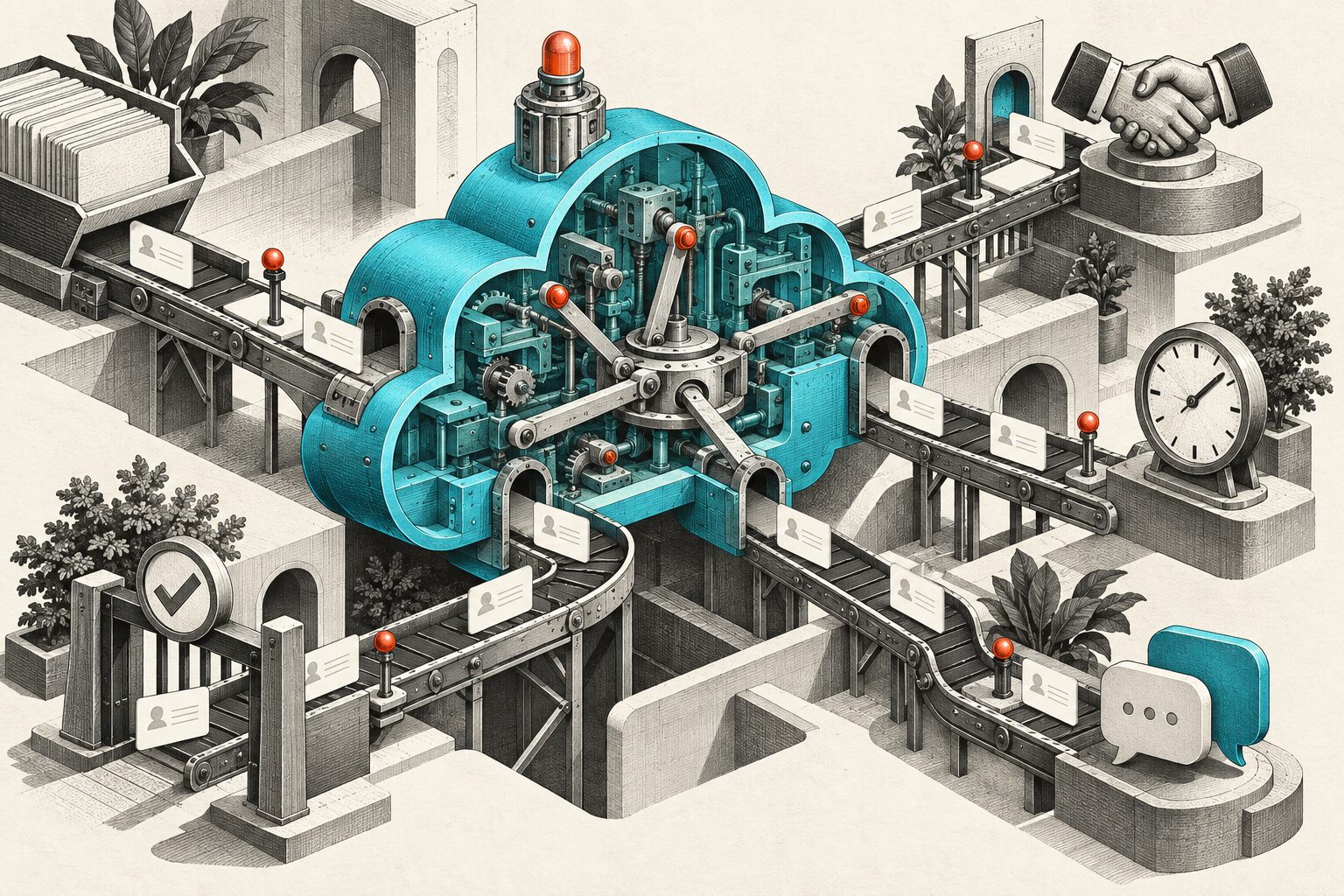
Salesforce has built a model for the part of AI that carries the most operational risk inside a CRM: deciding which tool to use and what action should happen next.
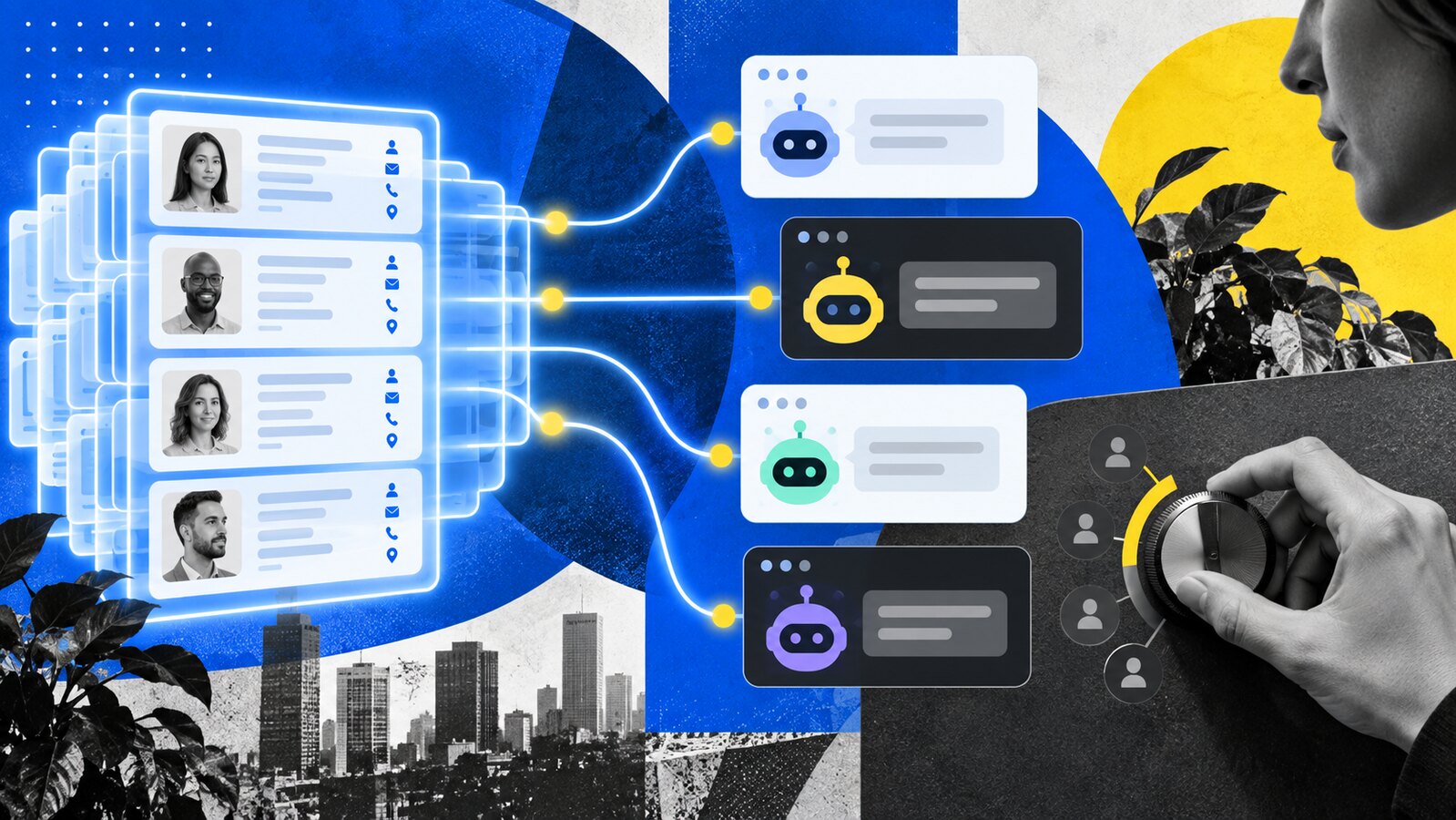
Koa, announced with NVIDIA on September 15, is Salesforce’s first reasoning model built specifically for Agentforce. The company trained it around sequences such as generating and qualifying a lead, updating an opportunity, routing a service case and scheduling a follow-up.
If a marketing team lets agents touch leads, customer conversations or CRM records, the model behind those actions becomes part of marketing governance. Teams need to know what it can access, what it can change and how its errors are caught.
Koa learned the sequence of CRM work
Salesforce started with NVIDIA’s open-weight Nemotron 3 Super 120B model. It then post-trained the model on public data and a proprietary set of synthetic scenarios modeled on its experience with enterprise CRM workflows.
Those scenarios span more than 14 industries. Each pairs a role with a task and maps the tool calls required to complete it. A model might need to identify the correct account, update a record, route a case and carry the context into a follow-up instead of producing a single answer.
Salesforce says no customer data was used to train Koa. It controls the model weights and runs post-training and inference inside its own infrastructure. Customers can select Koa at the organization, agent or sub-agent level, according to the company’s product materials.
That gives Salesforce more control over the system performing work inside its CRM. It also gives customers a clearer vendor to hold accountable when an agent takes the wrong action.
Marc Benioff, Salesforce chair and CEO, described the logic bluntly: “We trained a reasoning engine that understands the structure of a deal.” His argument is that the accumulated structure of deals, service cases and industry workflows can become part of the model itself.
The marketing consequence sits in the handoffs
CRM actions rarely stay inside one department. A lead moves from a campaign into scoring, sales follow-up, an opportunity and eventually onboarding or service. Each handoff depends on context and permissions.
Koa can sit inside that chain. Its decisions may influence which leads receive attention, which record gets updated, what a customer hears next and whether a follow-up happens. That makes model selection part of CRM governance for demand generation and lifecycle teams.
UChicago Medicine CMO Andrew Chang, whose organization is among the early pilot customers, said “Koa can work across those longer multi-step workflows.” The useful phrase is multi-step. A fluent email matters less if the agent attaches it to the wrong customer, misses an approval or takes an action with incomplete context.
Salesforce is also using Koa internally for an employee agent in Slack. Other named pilots include 1-800Accountant, Baxter Credit Union, Engine, Formula 1 and Xero. U.S. general availability is expected in winter 2026.
The benchmark supports a narrower claim
Salesforce says Koa makes three times fewer errors on its CRM benchmark while matching or exceeding leading model performance. That headline needs context.
In the Salesforce research paper, Koa scored 0.86 on CRM Bench. GPT-5.5 scored 0.90, Claude Opus 4.8 scored 0.87, GPT-4.1 scored 0.81 and the underlying Nemotron model scored 0.84.
The result shows that Salesforce’s specialization improved the base model and outperformed GPT-4.1 on the published evaluation. Koa remained below the strongest frontier model in the table. The paper was written by Salesforce researchers and has not been independently peer-reviewed.
The public materials don’t make the denominator behind “three times fewer errors” easy to reconstruct. Salesforce’s product page also cites better action precision, context reliability and long-conversation memory without naming a comparison model for each claim.
Those tests are evidence of model behavior on constructed tasks. They don’t establish better lead quality, faster pipeline, higher conversion or improved customer satisfaction.
Control still needs a test plan
Koa’s data boundary will matter to regulated companies. NVIDIA’s open model gave Salesforce the ability to control the weights and host inference in its trust boundary. Customer-authorized records can still be used during an agent’s operation, even though customer data was excluded from training.
That setup deserves evaluation on the buyer’s own workflows. Marketing and revenue teams should ask which actions Koa can take without approval, which records it can read or change, how a wrong action is reported and whether the team can compare Koa with another available model on the same task.
They should also test incomplete context. An agent needs a defined stopping point when a lead record is missing, two accounts look similar or a customer request conflicts with policy. Model accuracy is only one layer of the system. Permissions, tool design and human review determine how an error reaches the customer.
Salesforce has moved specialized reasoning closer to the records and workflows that run the revenue engine. Its earlier choice to make Claude the default in parts of Agentforce showed how model access can shape a platform. Koa gives Salesforce a model it controls more directly.
The next useful proof will come from the pilots: fewer wrong actions, faster completed workflows and measurable changes to pipeline or customer outcomes. Until those results arrive, Koa’s significance rests on infrastructure and an internal benchmark. Any revenue lift remains unproven.
Quoted in this story
- Marc Benioff, Chair and Chief Executive Officer, Salesforce (source)
- Andrew Chang, Chief Marketing Officer, UChicago Medicine (source)
Want your perspective in coverage like this? Get quoted.
Sources
- Salesforce: Announcing Koa: Salesforce's First CRM Reasoning Model, Built on NVIDIA Nemotron
- Salesforce: Salesforce Koa, built on NVIDIA Nemotron
- Salesforce Research: Salesforce Koa: An Enterprise Language Model for Agentic Tool Use
- NVIDIA: Now We Can Know Everything and Do Anything, Jensen Huang Says at Dreamforce
This story is part of our running coverage: The State of the AI Marketing Stack →
Get Net Effect, our Monday newsletter.
Net Effect is The State of AI Marketing's Monday recap: how AI is changing marketing, the moves brands are making, and what to do next.
Trouble loading the form? Open the signup form .